
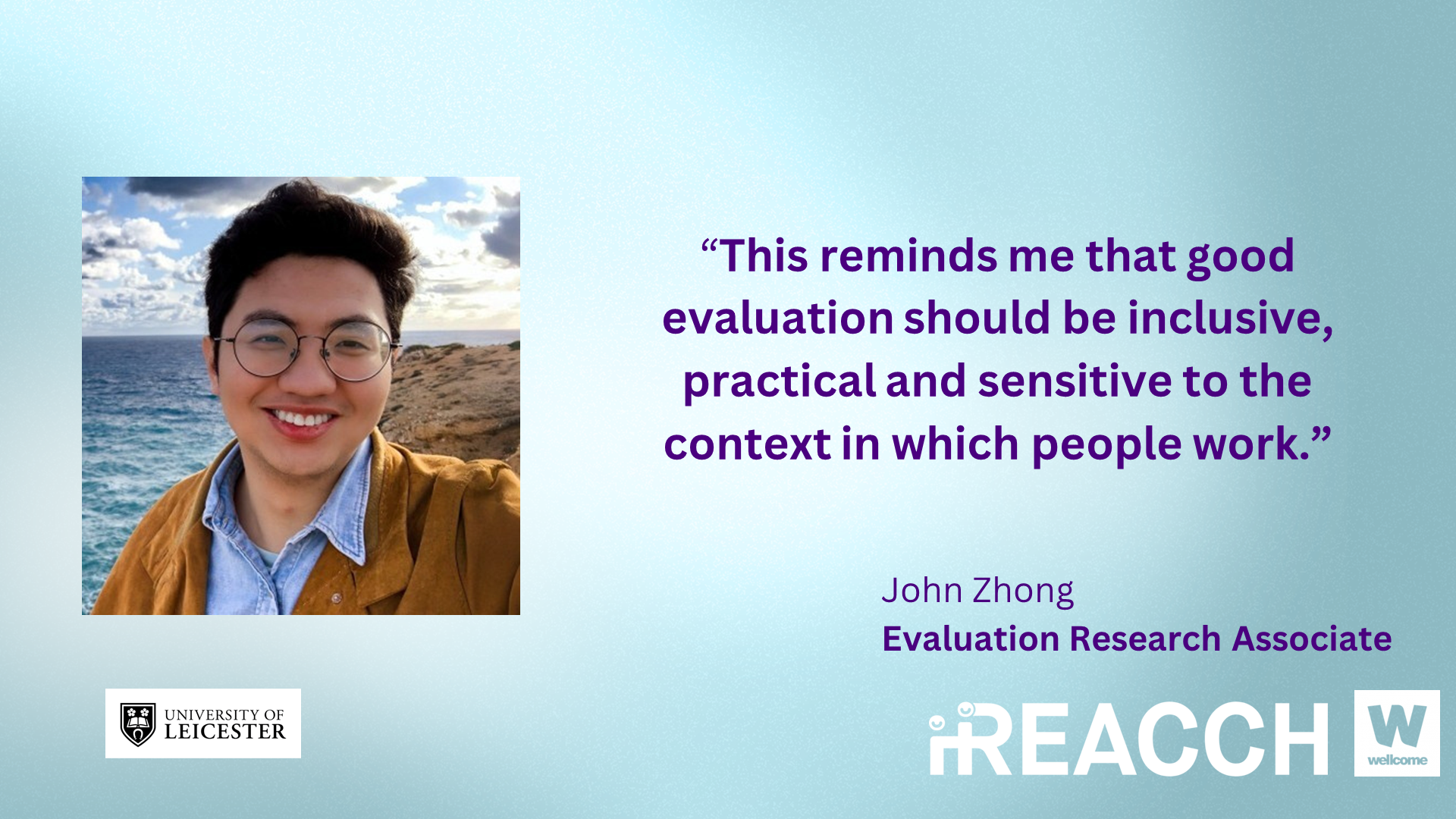
Meet John Zhong, the I-REACCH Evaluation Research Associate!
For me, evaluation in WS5 is not only about assessing whether an intervention works but also about understanding how it is experienced by those who use it or are affected by it, including staff, students and other stakeholders across the University of Leicester. This stakeholder-centred approach helps connect the different parts of I-REACCH, as each workstream addresses a distinct area while contributing to the shared goal of building a more diverse, equal, inclusive and respectful research culture. By gathering and reflecting on stakeholders’ experiences and insights, WS5 can support the improvement of individual interventions, assess their usefulness, accessibility and relevance in practice, and identify opportunities for the workstreams to align and complement one another to maximise their collective impact.
Anything interesting or cool about your work?
What I find interesting about my work is that, although my role focuses on evaluation, each workstream reflects an important part of the University’s wider research environment. The project covers areas such as support for early career researchers, inclusive career development, research culture interventions and improvements to the working environment. This helps me understand what the University of Leicester has already achieved, and how these areas are continuing to develop.
How do you think your work is helping individuals at Leicester and beyond?
As a member of staff, these efforts have helped me feel respected and supported at work. On a personal level, I also feel that I am becoming part of a diverse, inclusive and respectful community. Through my role as an Evaluation Research Associate in WS5, I hope to help others feel included as well. My work supports this by helping to bring voices and experiences from across the University community into the development and improvement of research culture interventions.
What are the circumstances you face while working at I-REACCH that you think reflect on the wider research culture?
One aspect of my work that reflects the wider research culture is the need to balance project delivery with meaningful participation. Evaluation is not only about collecting data. It also involves building trust, reducing participant burden, working ethically with colleagues, and recognising that people may experience research culture in different ways. This reminds me that good evaluation should be inclusive, practical and sensitive to the context in which people work.