
Workstream 5: Evaluation and Dissemination
Lead: Genovefa Kefalidou, Evaluation Research Associate: John Zhong
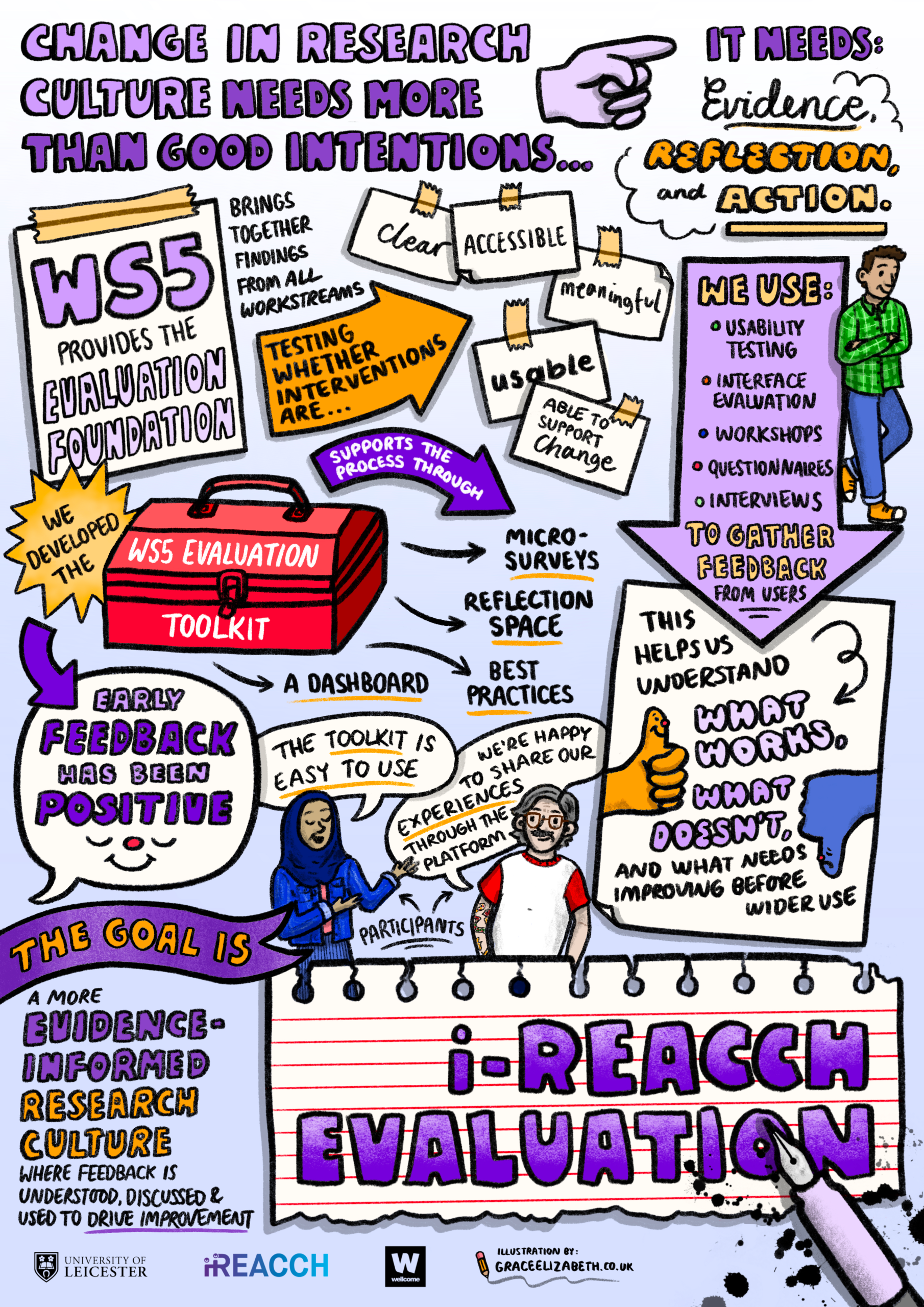
Over the past two years, Workstream 5 (WS5) developed and delivered a university-wide programme of research and evaluation at the University of Leicester, supporting all five I-REACCH workstreams. This work combined research culture surveys, co-design activities, usability testing, questionnaires, interviews and experience-prototyping workshops. WS5 also established a shared evaluation framework, supported the development of a digital Evaluation Toolkit, and generated evidence to guide improvements to the interventions. Drawing on perspectives from different University roles and career stages, WS5 aimed to connect people’s experiences with shared learning and practical action. Further qualitative analysis, programme-level synthesis and reporting were ongoing at the time of writing.
Key research activities and outputs
- University-wide research culture benchmarking: WS5 contributed to university-wide surveys in collaboration with Research Consulting and analysed research culture survey responses to establish an evidence base for the programme. Earlier co-design workshops, LEGO activities and interviews provided further insight into people’s experiences and priorities for improvement.
- A shared framework for university-wide evaluation: WS5 developed an evaluation matrix covering preparation, development, user experience and potential impact. This provided a common structure for evaluating all five I-REACCH workstreams while recognising their different interventions, users and contexts.
- The WS5 Evaluation Toolkit: Developed within the university-wide programme, the digital Toolkit brought together MicroSurveys, Reflection Space, a Dashboard and Best Practices. These features supported sharing experiences, exploring feedback and learning from practices across the University. Co-design, participant feedback and technical development informed further improvements to the Toolkit.
- University-wide micro-survey programme: Short surveys gathered views on different aspects of research culture over the past two years. Survey questions, communication materials and webpage resources supported continued participation and provided evidence for understanding experiences and identifying issues for further exploration.
- Formative evaluation within the university-wide programme: WS5 completed 22 workshop sessions across the WS2 Career Atlas and WS5 Evaluation Toolkit studies, combining task-based activities, questionnaires, observations and interviews. The research identified strengths, usability difficulties and priorities for improvement. Quantitative analyses were complete, with further qualitative integration informing the final reports.
- University-wide summative evaluation: Two experience-prototyping workshops brought together participants from across the University, ranging from postgraduate researchers to senior management. Five linked activities based on fictional scenarios connected the WS1–WS5 interventions within a single researcher journey, exploring their combined user experience, feasibility and anticipated impact.
- WS5 collected follow-up feedback through a circulated questionnaire, with analysis and reporting continuing.
- Research reports, resources and dissemination: Outputs from the university-wide evaluation programme included research summaries, evaluation materials, presentations and an initial WS5 evaluation report. WS5 shared findings through I-REACCH events, alongside earlier research culture benchmarking presented at HEIR 2025. WS5 was preparing the initial report for LIAS working-paper submission, while further analysis and the two-year synthesis would inform final reporting and future publications.